

Wernicke’s Encephalopathy is a serious, acute neurological disorder caused by a severe deficiency of thiamine, in other words, a lack of vitamin B1. When the brain is deprived of this essential vitamin, it cannot properly convert glucose into energy. Without that energy supply, certain regions of the brain begin to break down, triggering a rapid and potentially devastating cascade of neurological symptoms.
At Lawrence, Beirne & Lewis, we represent patients and families throughout the Greater Cincinnati region, including Northern Kentucky and Cincinnati, Ohio, who have been harmed by preventable medical errors related to Wernicke’s encephalopathy as well as its more progressed version, Wernicke-Korsakoff Syndrome. If you believe you may have a malpractice claim, we encourage you to schedule a free case evaluation as soon as possible to discuss your legal options moving forward. Call us toll-free at (800) 698-4054 or complete our online intake form to get started today.
Wernicke’s Encephalopathy: What Is It & Why Does It Matter?
The condition is named after Carl Wernicke, the German neurologist who first described it in 1881. While it was historically associated with chronic alcohol consumption, Wernicke’s Encephalopathy can affect anyone who experiences significant thiamine deficiency, including hospital patients receiving inadequate nutritional support, individuals with eating disorders, cancer patients undergoing chemotherapy, or postoperative patients who are not properly monitored.
Wernicke’s Encephalopathy is largely preventable. When healthcare providers fail to recognize the warning signs, fail to adequately monitor thiamine levels in at-risk patients, or fail to administer prompt treatment, patients can suffer irreversible brain damage as a result, and that failure may constitute medical malpractice.
Wernicke’s Encephalopathy vs. Korsakoff Syndrome
Wernicke’s Encephalopathy and Korsakoff Syndrome are two distinct but closely related conditions that are often discussed together under the umbrella term Wernicke-Korsakoff Syndrome (WKS).
Wernicke’s Encephalopathy is the acute phase. It is characterized by three hallmark features: confusion, abnormal eye movements, and problems with balance and coordination (gait ataxia). If caught early and treated promptly with thiamine, the condition can often be reversed.
Korsakoff Syndrome, by contrast, is the chronic phase that can develop if Wernicke’s Encephalopathy is inadequately treated or goes untreated entirely. It is a severe memory disorder marked by an inability to form new memories (anterograde amnesia), gaps in existing memory, and confabulation (where patients unknowingly fabricate memories to fill in the blanks). Wernicke-Korsakoff Syndrome is far less reversible than Wernicke’s Encephalopathy and often results in permanent cognitive impairment.
The progression from Wernicke’s to Korsakoff depends almost entirely on how quickly and effectively the underlying thiamine deficiency is addressed. This is why prompt, accurate diagnosis by medical professionals is so critical. If they failed to do so, an experienced Wernicke-Korsakoff lawyer at LBL can help make sure those professionals are held accountable and that you and your family receive justice.
What Causes Wernicke’s Encephalopathy?
The root cause is always the same: a dietary deficiency or severe deficiency of thiamine (vitamin B1). Although it may appear to be a single vitamin deficiency, its consequences are far-reaching, touching multiple enzyme systems and metabolic pathways simultaneously. The reasons a patient may develop thiamine deficiency vary widely:
- Chronic alcoholism impairs thiamine absorption and is the most commonly cited risk factor.
- Prolonged vomiting, including hyperemesis gravidarum (severe morning sickness during pregnancy) and bulimia.
- Malnutrition or starvation, whether from eating disorders like anorexia nervosa, extreme dieting, or inadequate caloric intake.
- Gastrointestinal surgery, including bariatric surgery, gastric bypass surgery, or bowel resection, which can impair nutrient absorption.
- Cancer and chemotherapy, as both the disease and its treatment can deplete thiamine stores.
- Prolonged IV nutrition without supplementation, as patients receiving total parenteral nutrition (TPN) who are not given adequate thiamine are at serious risk.
- Dialysis patients are also at risk, as renal failure and dialysis can deplete water-soluble vitamins, including thiamine.
- Diuretic therapy used in managing congestive heart failure can deplete water-soluble vitamins, including thiamine.
- Other conditions like liver disorders, HIV/AIDS, and renal failure treated with dialysis can all contribute to thiamine depletion through malabsorption or increased excretion
In a hospital setting, one of the most preventable causes is the administration of glucose-containing IV fluids to a thiamine-deficient patient without first supplementing thiamine. Glucose metabolism requires thiamine, and flooding a thiamine-deficient system with glucose can rapidly deplete any remaining minimal reserves and precipitate an acute Wernicke’s episode.

Where is Wernicke’s Area in the Brain?
Wernicke’s area is located in the left temporal lobe of the brain, typically in the posterior portion near the auditory cortex. It plays a key role in language comprehension, allowing you to understand spoken and written words. Damage to this area can lead to Wernicke’s aphasia, a condition where a person may speak fluently but struggle to understand language or produce meaningful communication.
When Does Wernicke’s Encephalopathy Develop?
Wernicke’s Encephalopathy can develop at any point when thiamine stores have been sufficiently depleted, which can happen in as little as two to three weeks of inadequate thiamine intake. In hospitalized patients, the onset can be even more rapid, particularly when illness, surgery, or aggressive IV fluid administration accelerates depletion.
The timing is especially dangerous because the condition can emerge suddenly in patients who appear otherwise stable. A postoperative patient, a pregnant woman battling prolonged vomiting, or a cancer patient undergoing treatment may all be at elevated risk without anyone on their care team proactively screening for or supplementing thiamine.
This is why identifying at-risk patients and initiating preventive thiamine supplementation is considered a fundamental standard of care in many clinical settings, and why failure to do so can have life-altering consequences.
How Common is Wernicke’s Encephalopathy?
Wernicke’s Encephalopathy is widely considered to be significantly underdiagnosed. Studies have found that the condition is identified clinically in only about 20% of cases, meaning the vast majority are missed until autopsy. For nonalcoholic Wernicke encephalopathy patients, that number is about 16%. Studies provided by the National Library of Medicine also show that over half (58%) of cases involving children were missed.
The underdiagnosis problem is compounded by the fact that the clinical triad of symptoms (confusion, eye movement abnormalities, and ataxia) is only present in roughly 16% of confirmed cases. In fact, a higher percentage of patients (approximately 19%) have none of these classic signs and symptoms. The overreliance on these 3 clinical signs often leads healthcare providers to overlook the diagnosis.
This diagnostic gap represents a serious patient safety issue, and in cases where the diagnosis was missed despite clear warning signs, legal accountability may be warranted.
How To Diagnose Wernicke’s Encephalopathy
Diagnosing Wernicke’s Encephalopathy requires a combination of clinical judgment, patient history, and supporting tests. There is no single definitive diagnostic test, which is one reason the condition is so frequently missed until serious damage has already occurred.
Clinical diagnosis in internal medicine and emergency settings is based primarily on recognizing the hallmark clinical signs and identifying known risk factors. Physicians should assess patients for the classic triad and consider the diagnosis in any patient who presents with confusion alongside risk factors such as alcohol use, recent surgery, prolonged vomiting, or malnutrition.
Blood tests can measure thiamine levels, though normal levels do not necessarily rule out the condition, and results may not be immediately available in an emergency setting. Physicians may also check for elevated pyruvate (reflecting impaired pyruvate dehydrogenase activity) or low red blood cell transketolase activity, which can support the diagnosis.
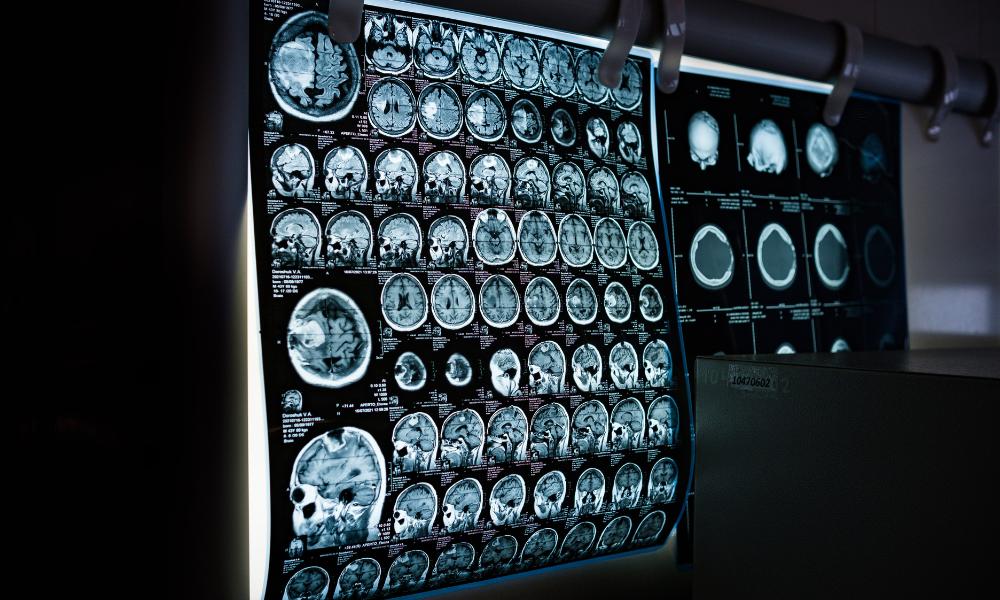
Magnetic resonance imaging (MRI) can reveal characteristic changes like brain lesions in areas of the brain most vulnerable to thiamine deficiency, particularly the mammillary bodies, thalamus, and periaqueductal gray matter. However, MRI findings are not always present, especially in early-stage disease.
Given the risk of rapid deterioration, current clinical guidelines generally recommend that physicians treat empirically, meaning they administer high-dose intravenous thiamine immediately when Wernicke’s Encephalopathy is suspected, without waiting for confirmatory test results.

Wernicke’s Encephalopathy Symptoms
The symptoms of Wernicke’s Encephalopathy reflect the brain regions most affected by thiamine deficiency. The classic triad includes:
- Encephalopathy (Confusion/Altered Mental Status) — Patients may appear disoriented, drowsy, inattentive, or have difficulty concentrating. In severe cases, they may lose consciousness.
- Oculomotor Abnormalities (Eye Problems) — Abnormal eye movements, double vision, drooping eyelids, or involuntary rapid eye movement (nystagmus).
- Ataxia (Gait and Balance Problems) — Unsteady walking, poor coordination, or an inability to stand without support.
Beyond the classic triad, patients may also experience other symptoms, including:
- Hypothermia (low body temperature)
- Low blood pressure
- Rapid heart rate
- Peripheral neuropathy (tingling or numbness in the hands and feet)
- Memory impairment
- Severe fatigue
- Signs of other nutritional deficiencies
Because many patients do not present with all three classic features, or even any at all, a high index of suspicion is required, particularly in at-risk populations.
Wernicke’s Encephalopathy Eyes
One of the most diagnostically significant features of Wernicke’s Encephalopathy is its effect on eye movement. The abnormal ocular findings associated with this condition result from damage to the cranial nerves and brainstem regions that control eye movement.
Common ocular signs include:
- Nystagmus — Involuntary, rhythmic eye movements, often horizontal.
- Ophthalmoplegia — Weakness or paralysis of the muscles controlling eye movement, causing the eyes to remain in a fixed or limited range of motion.
- Lateral Rectus Palsy — Weakness of the lateral rectus muscle, causing an inability to move the eye outward, often resulting in double vision.
- Lateral Gaze Palsy — The inability to move both eyes together in the same direction.
- Ptosis — Drooping of the upper eyelid.
These Wernicke’s encephalopathy eye signs can be subtle or fluctuate in presentation, and they may be mistaken for symptoms of other brain disorders such as stroke or multiple sclerosis. A thorough neurological examination by a trained clinician is essential for an accurate differential diagnosis and early diagnosis of this condition.
Is Wernicke’s Encephalopathy Reversible?
Yes, if caught and treated promptly, Wernicke’s encephalopathy can be reversible. The key phrase here is “caught and treated promptly.” With rapid parenteral administration of high-dose thiamine, many patients experience significant improvement within hours to days, particularly regarding their eye-movement abnormalities.
However, some degree of damage may persist even with treatment, particularly if the diagnosis was delayed. The longer the brain is deprived of thiamine, the greater the risk of permanent neurological injury, including cerebellar dysfunction that never fully resolves and the severe memory loss characteristic of Korsakoff Syndrome.
This is precisely why the failure to diagnose and treat Wernicke’s Encephalopathy in a timely manner can constitute medical negligence. A few hours can make the difference between a full recovery and a lifetime of cognitive disability.
Does Wernicke’s Encephalopathy Go Away On Its Own?
No. Wernicke’s Encephalopathy does not resolve on its own without treatment. Because the underlying cause is a nutritional deficiency, the condition will continue to worsen, often rapidly, without proper thiamine treatment. Left untreated, it can progress to Korsakoff Syndrome, coma, or death.
This is not a condition that can be waited out; it demands urgent medical intervention, and every hour of delay in preventing Wernicke’s Encephalopathy from progressing increases the likelihood of permanent harm.
Is Wernicke’s Encephalopathy Curable?
The acute phase of Wernicke’s Encephalopathy is treatable and potentially curable if thiamine is administered quickly enough. The eye movement abnormalities tend to respond most rapidly to treatment. Confusion and ataxia may improve more gradually.
However, the degree of recovery depends heavily on:
- How quickly treatment was initiated, as delays significantly worsen outcomes.
- The severity of the deficiency, as more prolonged deficiency leads to more severe and potentially irreversible brain damage.
- Whether the underlying cause is addressed. Simply giving thiamine once is not enough; the cause of the deficiency must also be identified and managed.
If Korsakoff Syndrome has already developed, the prognosis is significantly poorer.
How To Treat Wernicke’s Encephalopathy
Managing Wernicke’s Encephalopathy requires immediate parenteral (intravenous) thiamine administration. Oral thiamine is not adequate in acute cases due to poor absorption. Standard protocols, consistent with guidelines from neurological societies, typically involve:
- High-dose parenteral thiamine administered multiple times per day for several days, followed by maintenance dosing using thiamine supplements
- Correction of other electrolyte imbalances, particularly magnesium (which is necessary for thiamine-dependent enzymes to function properly)
- Avoidance of glucose administration until after parenteral administration of thiamine has been initiated. Failing to do so impairs the pyruvate dehydrogenase complex and can trigger or worsen acute encephalopathy.
- Identifying and treating the underlying cause, whether alcohol use disorder, bariatric surgery, anorexia nervosa, or another condition contributing to the patient’s nutritionally deficient state.
It bears repeating: thiamine must be given before or simultaneously with any glucose-containing fluids. Administering glucose to a thiamine-deficient patient without first replenishing thiamine can precipitate or worsen an acute Wernicke’s episode.
Wernicke’s Encephalopathy Recovery Time
Recovery time varies considerably depending on the severity of the episode and the speed of treatment. In general, eye movement abnormalities tend to resolve most quickly, often within hours to days of thiamine administration. Ataxia may improve over days to weeks, though some patients have residual gait disturbances.
Cognitive symptoms and confusion can take weeks to months to fully resolve, and in some cases, they do not resolve completely. Korsakoff Syndrome, if it develops, represents a long-term and often permanent condition with no guaranteed recovery timeline.
Patients who receive prompt, adequate treatment have the best chance of a full or near-full recovery. Those who experience delayed diagnosis or subtherapeutic dosing face a much longer and less certain road, and unfortunately, many never fully recover.

Wernicke’s Encephalopathy Medical Malpractice Claims
Wernicke’s encephalopathy is a serious medical emergency that requires prompt recognition and treatment, yet it can remain undiagnosed when providers overlook key risk factors in nutritionally deficient patients with depleted thiamine reserves due to illness or malabsorption. In clinical medicine, prompt recognition matters because early symptoms such as confusion, coordination issues, and mild memory impairment can quickly progress to permanent brain damage if not treated. When providers fail to properly identify patients at risk or delay thiamine replacement, that failure may form the basis of a medical malpractice claim.
The Ohio and Kentucky medical malpractice lawyers at Lawrence, Beirne & Lewis understand how these cases develop and the long-term harm they can cause. Their dedicated team of attorneys works to determine whether medical providers followed accepted standards of care, including timely diagnosis and appropriate treatment. Through a detailed review of medical records and expert analysis, they build strong claims on behalf of patients and families affected by preventable neurological injury. If you believe a delayed diagnosis or lack of treatment of Wernicke’s encephalopathy caused harm, the team at LBL can guide you through your legal options and help pursue accountability.
Wernicke’s Encephalopathy Birth Injury Claims
You may wonder: what does Wernicke’s Encephalopathy have to do with birth injuries? The connection is significant. Hyperemesis gravidarum, a severe form of pregnancy-related nausea and vomiting, is one of the most well-documented causes of Wernicke’s Encephalopathy outside of alcohol abuse. Pregnant women who cannot keep food or fluids down for extended periods are at serious risk of thiamine deficiency, and if their healthcare providers fail to monitor for and supplement thiamine, catastrophic neurological injury can result, affecting not only the mother but potentially the developing baby.
Birth injury cases involving neurological injuries are complex. They require a thorough understanding of the applicable medical standards of care, access to expert witnesses, and the ability to analyze detailed medical records. At Lawrence, Beirne & Lewis, our Northern Kentucky, Cincinnati, & Dayton birth injury attorneys have the experience and resources to investigate these claims, identify where the standard of care was breached, and fight for the full compensation our clients deserve.

Speak With a Northern Kentucky & Cincinnati Wernicke’s Encephalopathy Attorney Today
If you or a loved one suffered serious harm due to an undiagnosed or mismanaged case of Wernicke’s Encephalopathy (whether during pregnancy, following surgery, or in any other medical setting), you may have grounds for a medical malpractice claim. The consequences of this condition can be life-altering: permanent memory loss, cognitive disability, and the inability to live independently. When those consequences result from a preventable medical error, the responsible parties should be held accountable.
Lawrence, Beirne & Lewis serves clients throughout the Greater Cincinnati area, including Covington, Kentucky, Cincinnati, Ohio, and surrounding communities in Northern Kentucky and Southwest Ohio. Our legal team is committed to providing compassionate, aggressive representation to those who have been failed by the medical system. Contact us today for a free consultation. There is no fee unless we recover compensation for you.
You can reach our Kentucky office at (859) 898-2472 or our Ohio office at (513) 643-1689. You can also call us toll-free at (800) 698-4054 or contact us online to schedule a free consultation with an experienced birth injury lawyer on our team today.
Don’t wait – medical malpractice claims are subject to strict statutes of limitations, and the sooner our team can begin investigating your case, the better positioned you will be to pursue justice.