
Home » Birth Injuries » Necrotizing Enterocolitis Attorney
Necrotizing Enterocolitis Attorney in Cincinnati & Northern Kentucky
Experienced Necrotizing Enterocolitis Lawyers for Birth Injury Claims Due To Medical Negligence

A baby fighting for life in the NICU should never face harm from a doctor’s mistake. The necrotizing enterocolitis attorneys in Cincinnati & Northern Kentucky at Lawrence, Beirne & Lewis are here for families when that happens.
Necrotizing Enterocolitis (NEC) is a serious medical condition in which intestinal tissue breaks down and dies. Premature babies face this risk far more often than full-term infants. A delayed diagnosis or improper care can turn a survivable condition into permanent, life-altering harm. Lawrence, Beirne & Lewis has decades of experience representing families across Ohio and Kentucky. If your child suffered harm from NEC, call us toll-free at (800) 698-4054. Alternatively, you can reach us in Kentucky at (859) 578-9130, Ohio at (513) 651-4130, or contact us online today.
Let’s Discuss Your Potential Case
Let’s Discuss Your Potential Case
What is Necrotizing Enterocolitis (NEC)?
NEC is a life-threatening illness that primarily attacks premature infants. It starts when the intestinal wall becomes inflamed, and bacteria invade the tissue. That invasion causes cellular damage and tissue death that spreads through the intestines. Damaged intestinal tissue loses its ability to absorb fluids and nutrients, putting the baby at greater risk. As the condition worsens, the intestines can perforate, releasing bacteria into the abdomen. This leads to infections like peritonitis and sepsis, which can be fatal.
According to the CDC, NEC is among the top 10 causes of infant death. The symptoms can be subtle at first, making them easy to miss. Early and prompt treatment is critical because NEC can develop rapidly. If that care is delayed or mishandled, our Northern Kentucky and Cincinnati birth injury attorneys can help your family pursue a medical malpractice claim.
Necrotizing Enterocolitis Stages and Severity Levels
Doctors use a three-stage system to measure how far NEC has progressed in newborn babies. Each stage reflects worsening damage to the intestinal lining.
Stage 1 is for when NEC is suspected. Early warning signs are present, but the condition is not yet confirmed. Stage 2 indicates definite NEC, with clearer physical and biological markers that confirm the diagnosis. By Stage 3, advanced NEC has taken hold, and the body is in serious crisis. Low birth weight infants who reach this stage face the highest risk of life-threatening complications.
Multiple organ systems can be affected at once if a severe infection spreads outside the intestines. As staging advances, treatment decisions become more aggressive, and surgical intervention often becomes necessary.

What Causes Necrotizing Enterocolitis?
Although researchers have identified several contributing factors, no single cause explains every case of NEC. Babies that are born prematurely are at the highest risk because their digestive systems are not fully developed. When blood flow to the intestines is reduced, the tissue begins to weaken and break down. Bacteria can then enter and infect that weakened tissue, triggering dangerous inflammation. Feeding complications also play a role, particularly when premature infants are fed formula instead of breast milk.
The neonatal intensive care unit environment itself poses additional risks that healthcare providers must actively monitor. Any infections that spread within a NICU can increase a baby’s exposure to harmful bacteria. Medical professionals are responsible for recognizing these risk factors early and adjusting care accordingly.
Necrotizing Enterocolitis Baby Formula Claims
In recent years, some NEC lawsuits have targeted baby formula manufacturers directly. Families of preterm infants allege that consuming Similac and other cow’s milk-based formulas significantly raises the risk of developing NEC. Abbott Laboratories and Mead Johnson, the respective makers of Similac and Enfamil, are often named in NEC baby formula lawsuits. The central argument in these cases is that infant formula makers knew about the dangers of their product. Despite this, they failed to include adequate warning labels for hospitals and parents.
Some National Library of Medicine studies show that human breast milk carries far lower risks of NEC for premature babies than cow’s milk-based alternatives. When medical staff encouraged or defaulted to formula feeding without disclosing that risk, families were left without the information they needed. In such cases, our Kentucky and Ohio NEC lawyers can help those impacted evaluate their legal options.

Necrotizing Enterocolitis Risk Factors in Newborns
There are several conditions that make a baby developing necrotizing enterocolitis far more likely. Premature birth is the greatest single risk factor, but it is rarely the only one present. Relevant risk factors can include:
- Premature birth and low birth weight: NEC primarily affects premature babies whose intestines are not yet fully developed. Low birth weight babies are also at increased risk.
- Formula feeding: Babies fed breast milk show lower NEC rates than those fed cow’s milk-based products. Human milk-based formulas carry less risk than standard formula, but nothing replaces breast milk.
- Oxygen deprivation at birth: When oxygen is cut off during delivery, intestinal tissue weakens, making it vulnerable to bacterial invasion.
- Immature immune systems: A newborn’s underdeveloped defenses struggle to contain infection once it takes hold.
- Body temperature instability: Difficulty maintaining body temperature is both a warning sign and a known contributing factor.
- Poor NICU monitoring: Medical facilities that miss early symptoms put fragile newborns at serious risk.
Our Northern Kentucky and Cincinnati medical malpractice lawyers help families find out whether negligent care contributed to their child’s diagnosis.
Necrotizing Enterocolitis Signs and Symptoms
Common symptoms are usually subtle at first, making them easy to overlook. Necrotizing enterocolitis symptoms can look like:
- Abdominal pain or swelling
- Feeding intolerance and babies who don’t gain weight
- Constipation, diarrhea, or bloody stool
- Green or yellow vomiting or bile-stained fluid
- Lethargy and temperature instability
- Blood pressure drops
These symptoms can escalate rapidly, leaving families with little time to act. If you notice these symptoms, seek medical care immediately. Afterward, follow up with a qualified attorney at Lawrence, Beirne & Lewis.
Necrotizing Enterocolitis Diagnosis in the NICU
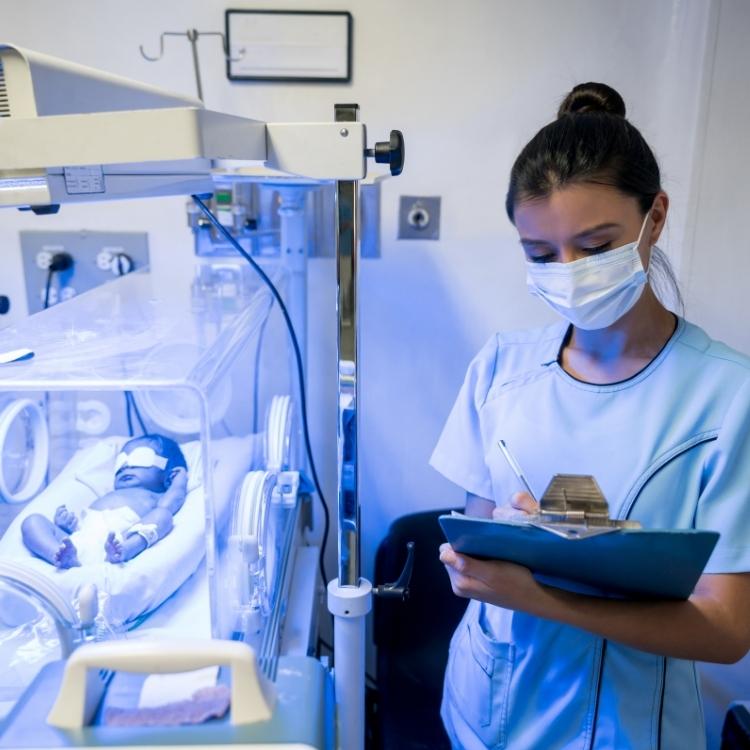
Catching NEC early depends on how quickly and carefully the medical staff acts when symptoms show up. Most doctors typically begin with a physical examination to check for abdominal tenderness, bloating, and other visible warning signs. Abdominal X-rays are used to look for abnormal gas patterns or signs of intestinal perforation. Some markers, like blood tests, help detect infection and falling platelet counts. This can confirm how far NEC has progressed.
Failure to diagnose and properly treat NEC qualifies as medical malpractice. Families who suspect their child was harmed should speak with the experienced failure to diagnose lawyers in Ohio and Kentucky at our law firm.
Can Necrotizing Enterocolitis Be Cured?
Early treatment gives babies the best chance at recovery, but outcomes vary widely. When caught quickly, a child’s NEC may be managed without surgery through bowel rest and antibiotics. Most surgical cases have far greater risks, including permanent intestinal damage and developmental delays. How fast the medical staff responds often determines what a family faces long-term. Ohio and Kentucky necrotizing enterocolitis attorneys can help you determine whether proper care was provided in a timely manner.
Necrotizing Enterocolitis Treatment Options
Once a diagnosis is confirmed, the medical team must act immediately to begin treatment. Doctors stop feedings and shift the baby to IV nutrition, giving the intestines time to rest and recover. Antibiotics help fight the bacterial infection driving the inflammation. In severe cases, surgery may become necessary to remove the dead or perforated intestinal tissue.

Necrotizing Enterocolitis Complications and Long-Term Effects
Infants who survive NEC may face serious conditions that follow them well past the NICU. An abdominal infection can cause lasting damage to the intestines. Sometimes, partial or full removal of affected tissue is necessary. When a large amount of intestinal tissue is lost, babies can develop short bowel syndrome. This condition affects the body’s ability to absorb nutrients. As the child develops, they will face feeding challenges and growth issues that require ongoing care. Developmental delays are common among NEC survivors, particularly those who required surgery.
Many children who have NEC survive but go on to need lifelong medical care, repeated procedures, and specialized nutritional support. The financial and emotional toll can be overwhelming. When negligent care contributed to these outcomes, families have the right to pursue fair compensation for what their child will face.
When Medical Negligence May Warrant a Lawsuit for Necrotizing Enterocolitis
Harm caused by preventable medical errors may provide families with strong legal grounds for a lawsuit. NICU staff have a clear duty to monitor premature infants closely and respond when things happen. Failure to track symptoms, delayed diagnosis, and misdiagnosis are among the most common issues in NEC cases. The basis of a claim can include improper feeding practices, such as pushing cow’s milk-based formula when breast milk was available. One of the most serious failures a medical team can make is failing to intervene in a timely manner once NEC is suspected.
Whatever the cause of negligence, we’re prepared to hold individuals, teams, and entire facilities accountable. Don’t wait to contact our hospital negligence attorneys in Covington and Cincinnati.
Proving Liability in a Necrotizing Enterocolitis Lawsuit
Four elements, known as the 4 Ds of negligence, must be established to hold a medical provider legally responsible. The first is that the provider owed the baby a duty of care. Second, we must establish that the provider breached their duty through an action or failure to act. Third, we will show that the breach directly caused the child’s injuries. The fourth element is that those injuries resulted in measurable damages for the family.
Medical records play a central role in proving each of these elements. They document what staff knew, when they knew it, and what steps they took or failed to take. Multiple parties can share liability in NEC cases, including NICU nurses, attending physicians, hospital administrators, and formula manufacturers. Kentucky and Ohio NEC attorneys at Lawrence, Beirne & Lewis identify every responsible party and build the evidence needed to support the family’s claim.
How a Necrotizing Enterocolitis Lawyer Can Help
Families dealing with an NEC diagnosis are already bearing a huge burden. A skilled attorney steps in to handle the legal work so parents can focus on their child. Our team will review hospital records and NICU documentation to identify where care fell short. We bring in medical experts to examine those records and pinpoint specific errors. Their findings form the foundation of a strong and well-supported claim.
Compensation can cover medical expenses, ongoing care costs, and emotional distress suffered by the family. In cases where negligence was particularly reckless, courts may also award punitive damages. Our team always seeks maximum compensation for families affected by negligence. The Lawrence, Beirne & Lewis team guides you through each step of this process with clear communication and consistent support.
Why Make Lawrence, Beirne & Lewis Your Trusted Necrotizing Enterocolitis Law Firm?
Birth injury claims involving NEC are some of the most complex cases in medical malpractice law. Lawrence, Beirne & Lewis has spent decades building the knowledge needed to handle them effectively. Our attorneys understand Ohio and Kentucky malpractice laws inside and out. They apply that knowledge directly to each family’s situation.
No two NEC cases are alike, and the legal strategy we build for each family reflects that. We approach every claim with a comprehensive review of the medical timeline, the providers involved, and the resulting harm. Our firm takes these cases on a contingency fee basis, meaning you pay nothing unless we recover compensation. A free case evaluation gives everyone the chance to understand their options before making any decisions.

Contact Our Experienced Northern Kentucky & Cincinnati NEC Attorneys for a Free Consultation Today
When your child suffers, you deserve more than unanswered questions. Families who believe medical negligence played a role in their baby’s NEC diagnosis have the right to find out what really happened. The Cincinnati & Northern Kentucky necrotizing enterocolitis attorneys at Lawrence, Beirne & Lewis are ready to stand beside you. Time matters in these cases because legal deadlines do not wait. A free consultation costs nothing and puts experienced advocates on your team
Call toll-free at (800) 698-4054 or contact our Kentucky office at (859) 578-9130 and our Ohio location at (513) 651-4130. Clients can also contact us online today.